
Last updated October 16, 2026
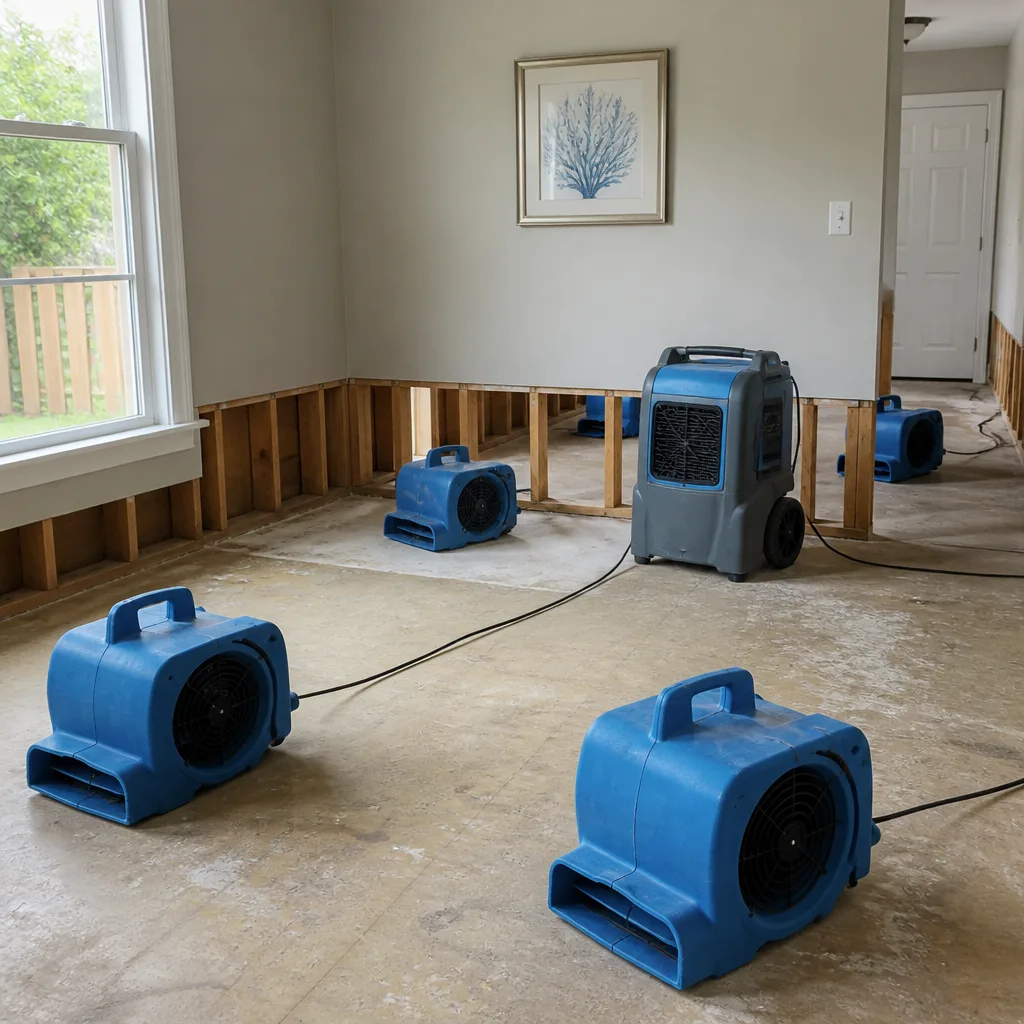 Water damage drying
 Fire & smoke cleanup
 Mold remediation
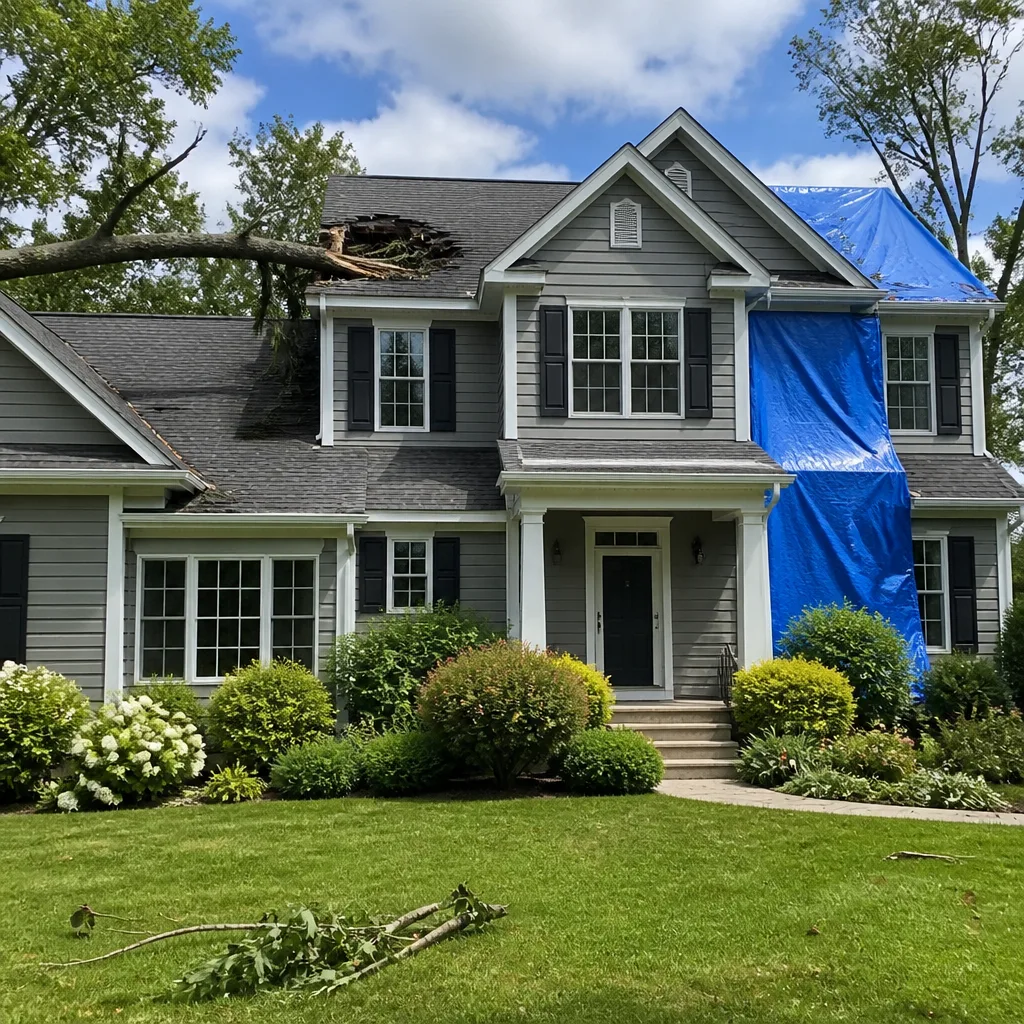 Storm response
 Sewage cleanup
 Reconstruction
Free visual inspection and a written scope of work before any mitigation begins - photos, moisture readings, and drying logs go in your claim file
The scope we write is the scope we bill. Anything new gets shown to you, in writing, before we touch it.
Get your free estimateDIY vs Professional Damage Restoration: The Fort Worth Homeowner’s Decision Guide
The homeowner who dries a water-damaged floor with box fans and documents nothing has not saved money. They’ve given their insurer grounds to deny a mold claim six months later on the basis that cause and timing can’t be established. This guide draws the exact line between what a Fort Worth homeowner can legally and practically handle after water, fire, or mold damage, and what requires a trained, documented professional to protect both the structure and the insurance claim. For how to hire a damage restoration contractor in Fort Worth: a step-by-step guide, see our dedicated resource. You’ll learn the three legal thresholds that flip a DIY project into a liability, what DIY actually covers legitimately, why box fans make mold problems worse, and how a failed DIY attempt affects your claim.
Quick Answer
DIY damage restoration is the right call only for surface water on sealed floors, cleaned and dried within 24 hours, with no drywall or insulation affected. Professional restoration becomes necessary, and often legally required, when mold exceeds 10 square feet, when the water is sewage-category or has sat more than 48 hours, or when structural materials must be removed and replaced under Fort Worth permit code. The cost difference between DIY and professional work is smaller than most homeowners assume once you account for equipment rental, disposal fees, and the risk of an insurance claim being denied for undocumented self-remediation.
Restoration work we handle
Table of Contents
- The Three Legal Thresholds That Flip DIY Into Liability
- What DIY Actually Covers Legitimately
- The Box Fan Problem: Why Air Movement Doesn’t Dry a Structure
- How a Failed DIY Attempt Affects Your Insurance Claim
- The Honest Cost Comparison: DIY Supplies vs a Written Professional Price
- Fire Damage: Where DIY Stops Being an Option at All
- Mold: The One Contaminant You Cannot Fully Remove Without Containment
- Fort Worth-Specific Factors: Climate, Code, and Construction
The Three Legal Thresholds That Flip DIY Into Liability
Most Fort Worth homeowners don’t realize that the DIY-versus-professional question in damage restoration is not about skill. It’s about three specific legal thresholds. Once any one of them is crossed, self-remediation stops being a cost-saving measure and becomes an insurance liability. A homeowner who ignores these lines and proceeds anyway isn’t just risking the structure. They’re risking the claim.
Threshold One: Mold colonies exceeding 10 square feet. The EPA publishes an explicit guideline: mold growth covering more than 10 square feet should be handled by a professional with containment and negative air pressure. That’s roughly a three-foot-by-three-foot patch. In our experience in Fort Worth, a visible patch that size almost always means hidden mold behind the drywall at two to three times the visible area. The visible patch is the tip. The colony behind the wall is the liability. When a homeowner scrapes off the visible mold and paints over it, the hidden colony continues spreading. Six months later, when the wall softens and the smell returns, the insurer sees a claim for mold that the homeowner “already handled.” That’s a denial waiting to happen.
Threshold Two: Sewage-category water intrusion. Clean water from a supply line is Category 1. Gray water from a washing machine or dishwasher overflow is Category 2. Sewage backup, toilet overflow beyond the bowl, or any flood water from outside is Category 3, and it is a biohazard. Fort Worth homes in older neighborhoods like Ridglea Hills or Wedgwood with mature trees frequently see sewer line root intrusion that backs up into the home. Category 3 water carries pathogens that box fans cannot address and household cleaners cannot reliably kill. The IICRC standard for sewage-category water requires extraction, removal of affected porous materials, antimicrobial application, and drying to a verified moisture content. That standard exists because the alternatives leave bacteria behind. A homeowner mopping sewage water and drying the spot with a fan is not cleaning. They’re spreading aerosolized waste particles across the room.
Threshold Three: Structural material removal requiring a permit in Fort Worth. The City of Fort Worth requires permits for structural alterations, including removal or replacement of load-bearing framing, subfloor sections, and in many cases, drywall replacement that exceeds cosmetic repair. When water damage requires cutting out a section of subfloor or a load-bearing wall plate, doing that work without a permit creates a documented code violation. If an insurer later learns that unpermitted structural work was performed, they may refuse to cover subsequent failures tied to that area, or worse, flag the entire claim for documentation review. The permit exists to establish that the work was done to a standard. Without it, the homeowner cannot prove the repair was sound.
These three thresholds aren’t arbitrary. They exist because crossing them changes the nature of the work from cleaning to reconstruction, and reconstruction requires documentation. A professional restoration company in Fort Worth documents every step: moisture readings before and after drying, equipment logs, material removal photos, permit records, and a written scope of loss. That documentation is what supports the insurance claim. The lack of it is what kills it.
What DIY Actually Covers Legitimately
We’re not here to tell every Fort Worth homeowner to call a professional for every spill. That’s not honest. There are legitimate DIY actions that are not only acceptable but recommended, and doing them correctly in the first 24 hours can reduce the total scope of damage materially. The key is knowing where DIY ends.
Shut off the water source. This is step one, always, and it doesn’t require a professional. Every homeowner should know where their main shutoff valve is before they need it. In Fort Worth, the main shutoff is typically at the street meter or where the supply line enters the slab or pier-and-beam foundation. If you can’t find it within two minutes, call the city water department. Shutting off the source stops the damage from spreading while you assess the next step.
Move contents out of the water path. Furniture, rugs, stored boxes, electronics on the floor. Everything porous that’s sitting in water is wicking it upward. Moving these items to dry ground is simple, safe, and reduces the replacement cost meaningfully. Document everything as you move it: timestamped photos of the water line on walls, the depth on floors, the items affected.
Clean up surface water on sealed floors within 24 hours. A tile bathroom floor with a failed supply line, caught immediately, cleaned and dried within a day, with no water reaching the drywall or under the flooring, is a legitimate DIY job. Use towels, a wet-dry shop vac if you have one, and run a fan. This works only when the water stayed on a non-porous surface and the exposure window was short. The moment water seeps under baseboards, into the subfloor, or behind cabinets, DIY stops covering you.
Document everything with timestamped photos. This is the most underrated DIY action in all of damage restoration. Take photos of the standing water, the source, what got wet, what you moved, and what you cleaned. Photos with timestamps create a cause-and-time record that your insurer will eventually ask for. The homeowner who dries a floor with box fans and photographs nothing has no evidence the event even happened correctly. The homeowner who photographs everything has the beginning of a defensible claim.
The line between DIY and professional work is not about effort. It’s about whether the water has reached porous materials, whether the exposure window has passed 24 to 48 hours, and whether any category of water beyond clean supply-line water is involved. When in doubt, the cost of a professional assessment is zero: Keegan Restoration Fort Worth provides free estimates in Fort Worth, and a phone call to (682) 900-2821 gets you a live person any hour of the day. For more guides & resources, visit our blog.
The Box Fan Problem: Why Air Movement Doesn’t Dry a Structure
Every hardware store sells box fans for under thirty dollars. Every homeowner owns at least one. And almost every homeowner assumes that pointing a fan at a wet floor will dry it out. That assumption is the single most common reason we get called to Fort Worth homes two weeks after the initial leak, when the smell has turned musty and the baseboards have started to warp.
Here’s the physics in plain language. A fan moves air. Moving air speeds up evaporation at the surface. That part works. But evaporation doesn’t make the water disappear. It puts that water into the air of the room. A residential box fan has no mechanism for removing moisture from that air. The humidity in the room rises, and that humid air then penetrates every porous material in the room, including the drywall, the studs behind the drywall, the subfloor, and the contents you thought you saved. You’ve moved the water from the floor into the walls and called it drying.
A professional-grade low-grain refrigerant dehumidifier works differently. It pulls the moisture-laden air across cold coils, condensing the water out of the air and into a collection reservoir or drain line. The air it returns to the room is dry, which allows the air to absorb more moisture from the wet materials, which gets pulled back through the dehumidifier. That’s the drying cycle: wet materials release moisture into dry air, the dehumidifier removes it, and the cycle repeats until the moisture content of the materials reaches an acceptable level. A box fan just blows wet air around until it’s evenly distributed in your walls.
The equipment we run on Fort Worth jobs includes Dri-Eaz and Phoenix refrigerant and desiccant dehumidifiers, along with high-volume air movers positioned for cross-flow evaporation. The difference is not just speed. It’s completeness. A fan can make a floor feel dry to the touch in a day. But the moisture that penetrated the subfloor, the bottom plate of the wall, and the insulation is still there, invisible, migrating. Six months later, that moisture becomes mold. The homeowner who dried the surface with fans has no moisture readings to prove the structure was dry. We record moisture content before, during, and after drying, and the written record is part of what supports the insurance claim.
One more point: Fort Worth summers run hot and humid. The ambient outdoor humidity in July and August can be 70% or higher. Running box fans in a house with the windows open is not drying, it’s pulling humid Fort Worth air across wet materials. The structure may never dry in those conditions. A sealed, dehumidified drying chamber is the only mechanism that removes water from the structure in our climate.
How a Failed DIY Attempt Affects Your Insurance Claim
The insurance conversation is where this gets painful for the homeowner who tried to handle it themselves. Insurers do not deny claims because the homeowner “didn’t hire a professional.” That would be too simple. They deny claims for the downstream consequences of the DIY attempt, and they do it with documentation the homeowner gave them.
Adjuster documentation of prior water exposure. When a homeowner files a claim for mold damage that appeared six months after a water leak, the adjuster’s first question is: when was the water event, and what was done about it? The homeowner says they dried it themselves with fans. The adjuster writes that down. Now the insurer’s position is that the homeowner failed to mitigate the loss properly, and the mold is the result of the homeowner’s inadequate drying, not the covered water event. The claim is denied on causation: the mold was caused by the homeowner’s insufficient response, not by the leak itself. The homeowner did the work, but the work didn’t work, and the insurer has a documented reason to point at it.
Insurer subrogation rights. This is where things get genuinely hostile. If a homeowner’s DIY repair fails and causes further damage, and a later claim covers that further damage, the insurer can pursue subrogation: the legal right to recover what they paid from the responsible party. In this case, the responsible party is the homeowner. In practice, that looks like the insurer denying the second claim as self-inflicted, or settling the claim and then seeking recovery from the policyholder. It’s rare but it happens, and the documentation from the first claim is what makes it possible. A homeowner with no professional documentation of the initial drying has no defense.
Warranty voidance on subsequent professional repair. Here’s a practical scenario we see in Fort Worth repeatedly. Homeowner handles a water loss themselves. Six months later, mold appears. Homeowner calls a professional mold remediation company. The mold remediation is done, but the professional’s written warranty covers only the mold remediation work performed. The underlying water damage, the inadequate drying, and the structural moisture that caused the mold are outside the warranty’s scope. The professional is not responsible for damage created by the prior DIY attempt. The homeowner ends up paying for mold remediation out of pocket, with no insurance coverage and no warranty protection for the root cause.
The smarter path is a professional written scope from the start. A restoration company documents the loss, the drying process, and the final moisture readings. That documentation goes to the insurer as evidence that mitigation was completed to industry standards. The insurer sees a verified drying record. The claim proceeds. The water damage restoration in Fort Worth process, when done professionally, is defensible. The DIY process leaves the homeowner holding a fan and a denial letter.
The Honest Cost Comparison: DIY Supplies vs a Written Professional Price
Let’s put actual numbers on this. The DIY-versus-professional comparison only works if you account for everything, not just the line items on a hardware store receipt.
DIY Costs for a Small Water Loss (Single Room, Clean Water)
- Box fans (2-3 units): $60 to $90
- Wet-dry shop vac rental or purchase: $40 to $120
- Dehumidifier rental (residential-grade, if you’re smart enough to get one): $40 to $80 per day for 3 to 5 days
- Moisture meter purchase or rental: $30 to $200
- Cleaning supplies, antimicrobial spray, trash bags: $40 to $80
- Disposal fees if drywall or carpet is removed: $50 to $150 per load
Realistic DIY total for one room: $300 to $700, assuming nothing goes wrong, the moisture meter says the structure is dry (and you know how to read it), and no materials need professional disposal.
Professional Costs for the Same Loss in Fort Worth
- Water extraction and drying (single room, clean water, 3-5 day drying): $1,800 to $3,500
- Includes professional-grade Dri-Eaz or Phoenix dehumidifiers, air movers, daily moisture readings, and a written drying record
- Includes a written scope before work starts, so the price doesn’t move
- Includes the 365-Day Done Right Promise: one full year of written coverage, with a free return visit if the repair fails
- Documentation is formatted to support the insurance claim
The surface-level difference is about $1,500. That’s real money. But here’s the honest math: the professional price includes a one-year written guarantee. If the DIY job fails, you pay $300 to $700 for the attempt, then you pay the full professional price anyway, plus whatever additional damage the failure caused. The failed DIY job doesn’t get reimbursed by insurance. It’s out of pocket, and it made the problem worse. The professional job, in many cases, is largely covered by the homeowner’s insurance policy, because the documentation supports the claim.
There is one scenario where DIY is genuinely the right answer. Surface water on sealed floors, caught within an hour, no drywall or flooring edge exposed, cleaned and dried within 24 hours. That’s a $50 job with towels and a fan, and it’s appropriate. Every other scenario eventually costs more than the professional route, either in repairs, denials, or both.
Fire Damage: Where DIY Stops Being an Option at All
Water damage has a gray zone where DIY can make sense. Fire damage has no gray zone. The moment a structure fire occurs in Fort Worth, the professional requirement begins, and it begins for reasons that have nothing to do with skill or cost.
Fire damage is not just burned material. It’s smoke, which is a particulate aerosol that penetrates every porous surface in the structure. It’s soot, which is acidic and corrosive and continues eating into surfaces the longer it sits. It’s water from the fire department’s suppression effort, which has now sat in the structure and begun the same water damage cascade described above. A homeowner attempting to clean fire damage is dealing with three simultaneous damage categories: structural char, corrosive soot, and trapped water. That’s not a weekend project.
The professional fire damage restoration process uses ozone treatment, thermal fogging, dry-ice blasting, and ultrasonic cleaning for contents, none of which are available to a homeowner at any price from a hardware store. The fire damage restoration in Fort Worth process also includes structural assessment to determine what can be salvaged and what must be replaced, which is an engineering judgment, not a cleaning decision.
Insurance is also a factor here, and it’s more rigid than with water. Fire claims are high-dollar, and insurers send their own adjusters, engineers, and in many cases, forensic analysts. The documentation standard is higher. A homeowner who has removed burned materials, thrown away contents, or attempted cleaning before the adjuster documents the loss has altered the scene. The insurer can argue that the homeowner destroyed evidence and interfered with the claims process. That argument is almost never used against a restoration company, because the professional documents the scene before touching anything, precisely to preserve the claim.
If you have fire damage in Fort Worth, do not clean anything, do not throw anything away, and do not move anything. Call (682) 900-2821 and get a live person who will walk you through the first 24 hours. The call is free, and the documentation starts the moment the professional arrives, not after the homeowner has accidentally destroyed evidence.
Mold: The One Contaminant You Cannot Fully Remove Without Containment
Of the three damage categories we handle, mold is the one where DIY attempts go the most consistently wrong, and the consequences are the most consistently severe. The problem is not that mold is hard to kill. Bleach kills mold on non-porous surfaces. The problem is that mold is a spore-former. Killing visible mold releases spores into the air, and without containment, those spores spread through the entire home and colonize every new damp surface they find.
Containment means establishing a negative air pressure zone around the affected area, sealing off doorways and vents with poly sheeting, and running HEPA-filtered air scrubbers to capture airborne spores. This is what the RIA and IICRC standards require for mold remediation. The homeowner who scrubs a moldy drywall patch with bleach has not contained anything. They’ve aerosolized the colony and distributed it through the HVAC system, into the ducts, into the carpet, into the closets.
Then there’s the question of what’s behind the visible mold. In Fort Worth’s pier-and-beam and slab homes alike, a visible mold patch on an interior wall is almost never the whole story. Moisture travels through wall cavities. The visible patch on the living room drywall may be fed by moisture trapped in the wall cavity from a leak that started months ago. The homeowner scrapes the visible patch, paints over it, and the hidden colony continues to grow. The smell returns. The wall softens. Now the remediation job is bigger than it would have been originally.
The mold remediation in Fort Worth process begins with containment before any mold is disturbed. Then the affected materials are removed under controlled conditions, the moisture source is identified and corrected, and the area is dried to a verified standard. The final step is a clearance inspection. A homeowner cannot do any of this without commercial equipment and training, and attempting to do partial work makes the eventual professional job more expensive, not less.
Fort Worth-Specific Factors: Climate, Code, and Construction
Damage restoration in Fort Worth operates under conditions that don’t apply in Phoenix or Minneapolis. The climate, the building stock, and the local code environment all shape what DIY can and cannot handle here. Our seasonal damage restoration care for Fort Worth: year-round homeowner’s guide breaks down how each season affects your home.
Climate. Fort Worth has a humid subtropical climate. Summer daytime highs run in the mid-90s to low 100s, with dew points that keep indoor ambient humidity high. This matters for drying. A structure that might air-dry in Las Vegas in two days will not air-dry in Fort Worth in July. The outdoor air is too wet. Professional drying equipment is not optional here during the summer months; it’s the only mechanism that works. Winter is the opposite problem: cold snaps can freeze supply lines, and a burst pipe in December or January is the most common cause of water damage we see in Fort Worth homes from Ridglea to Meadowbrook.
Construction stock. Fort Worth’s housing stock includes a significant percentage of pier-and-beam foundations from the mid-20th century growth period. Water from a leak travels downward through the floor assembly into the crawlspace, where it’s invisible and where mold thrives in the warm, still air. A homeowner drying a visible floor patch cannot see the crawlspace moisture. Professional restoration includes sub-floor inspection and drying, which requires crawlspace access and equipment that most homeowners have never considered.
Code environment. Fort Worth enforces the International Residential Code with local amendments, and the city’s Development Services department requires permits for structural repair work. We touched on this above, but it bears repeating: structural material removal without a permit is a code violation, and the city can require the work to be redone to code at the homeowner’s expense. The permit is not a bureaucratic hurdle. It’s the document that proves the work was done correctly.
The combination of these three factors means Fort Worth is not a market where casual DIY water damage repair is generally safe. The climate works against air drying, the housing stock hides moisture below grade, and the code requires documentation that DIY can’t provide. This is the context that matters when you’re making the call.
Common Mistakes to Avoid
- Waiting to see how bad it gets. Water damage is time-dependent. Every hour that water sits, it wicks further up the drywall, deeper into the subfloor, and closer to the framing. The Fort Worth homeowner who waits two days to see if it “dries on its own” has just turned a drying job into a reconstruction job.
- Using a household bleach solution on mold. Bleach on porous surfaces kills only the surface, and the water in the bleach solution feeds the roots. The visible mold fades, the hidden colony thrives, and the homeowner now has a false sense that the problem is handled.
- Removing damaged materials before the adjuster arrives. This applies to water, fire, and mold. The adjuster needs to see the damage to document the claim. Removing materials first gives the insurer a reason to question the claim’s validity.
- Running the HVAC system during a water or mold event. The air handler pulls air from the affected area and distributes it through the entire home. You’ve just spread the contamination. Shut the system off and leave it off until a professional clears it.
- Hiring the cheapest contractor who’ll start tomorrow. Fort Worth has no shortage of unlicensed, uninsured contractors who’ll show up fast, tear things out, ask for money, and disappear. The written scope before work starts is the single most important protection you have. If the contractor won’t put the price in writing before touching anything, walk away.
- Assuming insurance will cover everything regardless. Insurance covers sudden and accidental losses, and it covers mitigation that follows industry standards. It does not cover the consequences of the homeowner’s own inadequate response. The documentation is what makes the difference.
See the difference
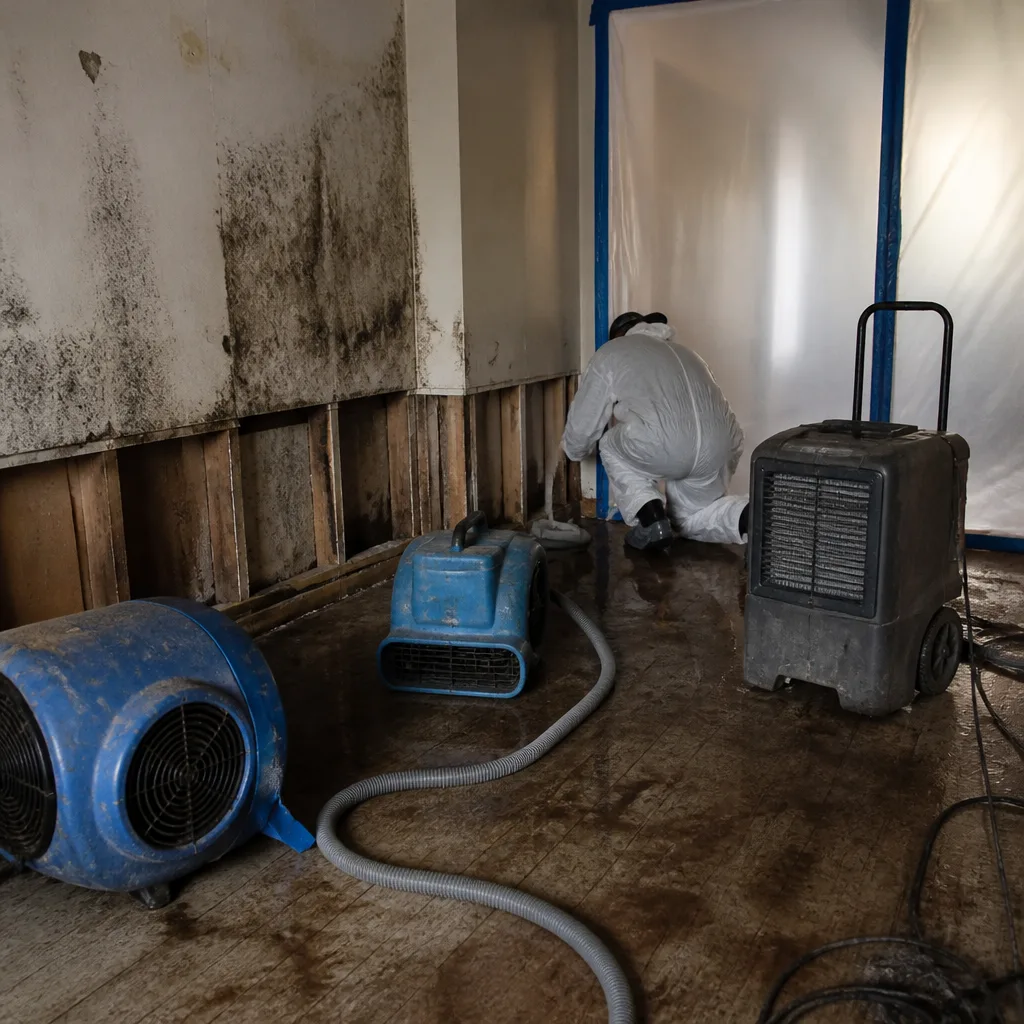 Before
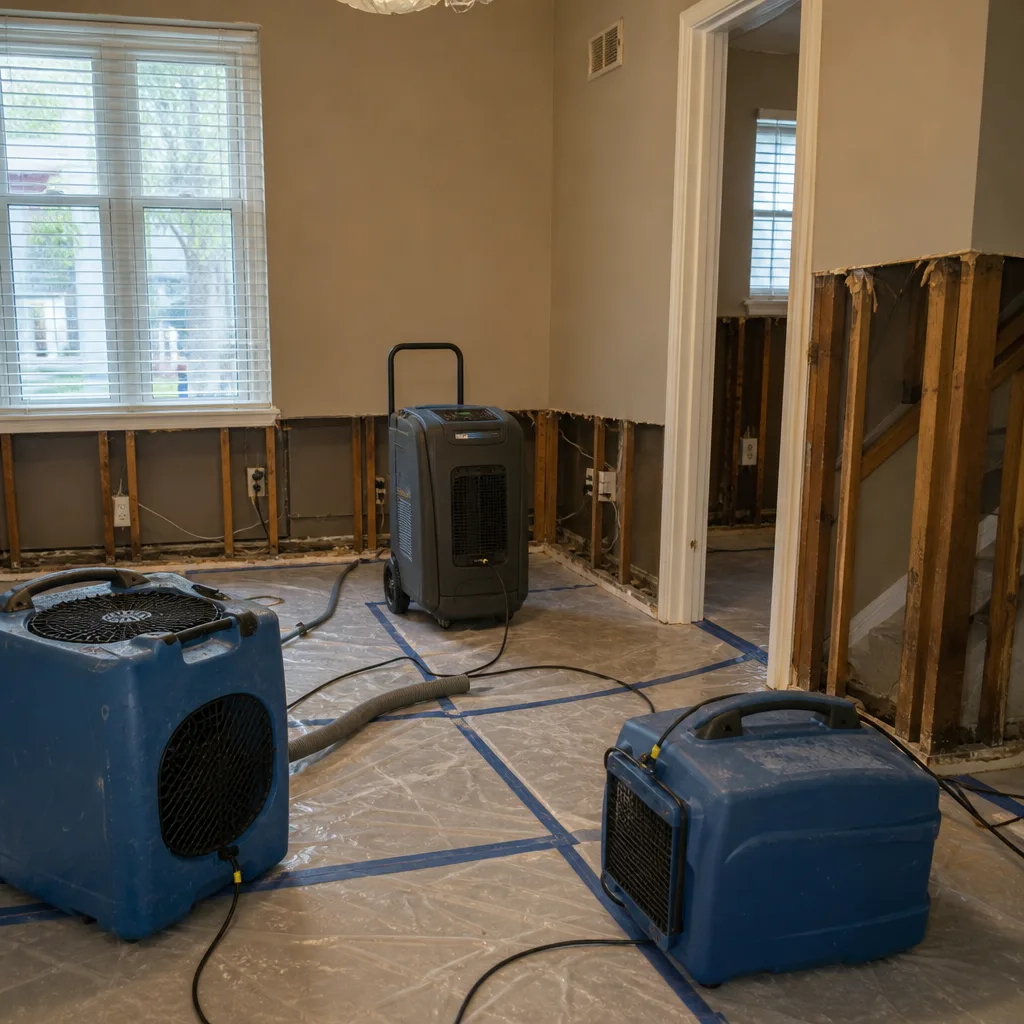 After
After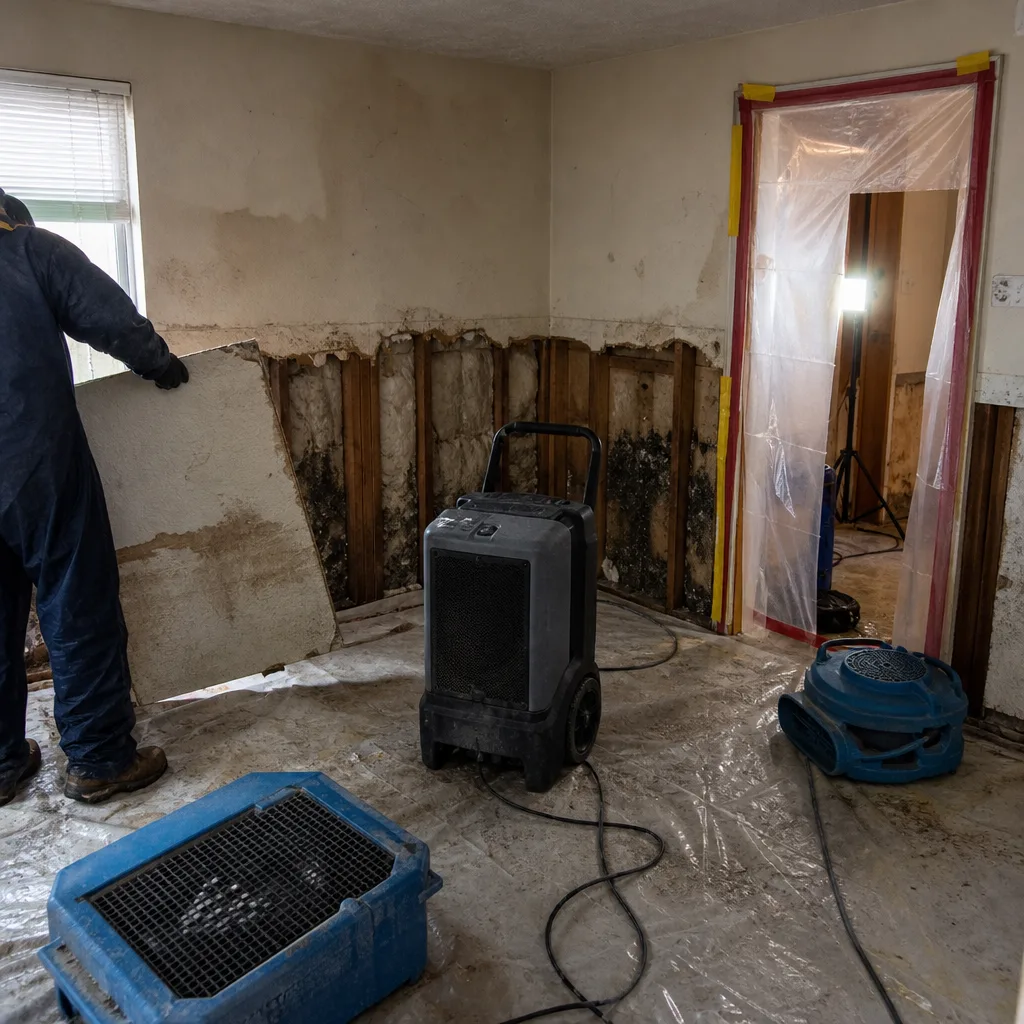 Before
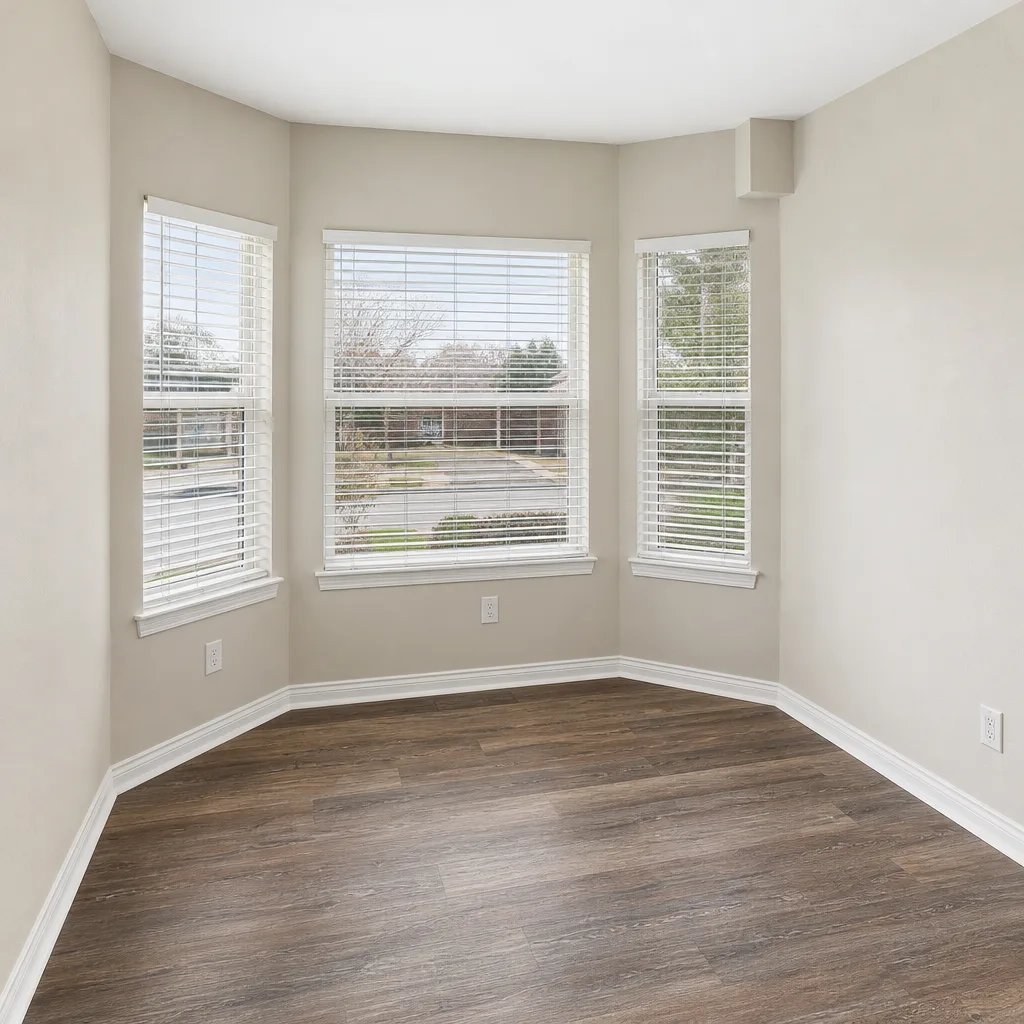 After
After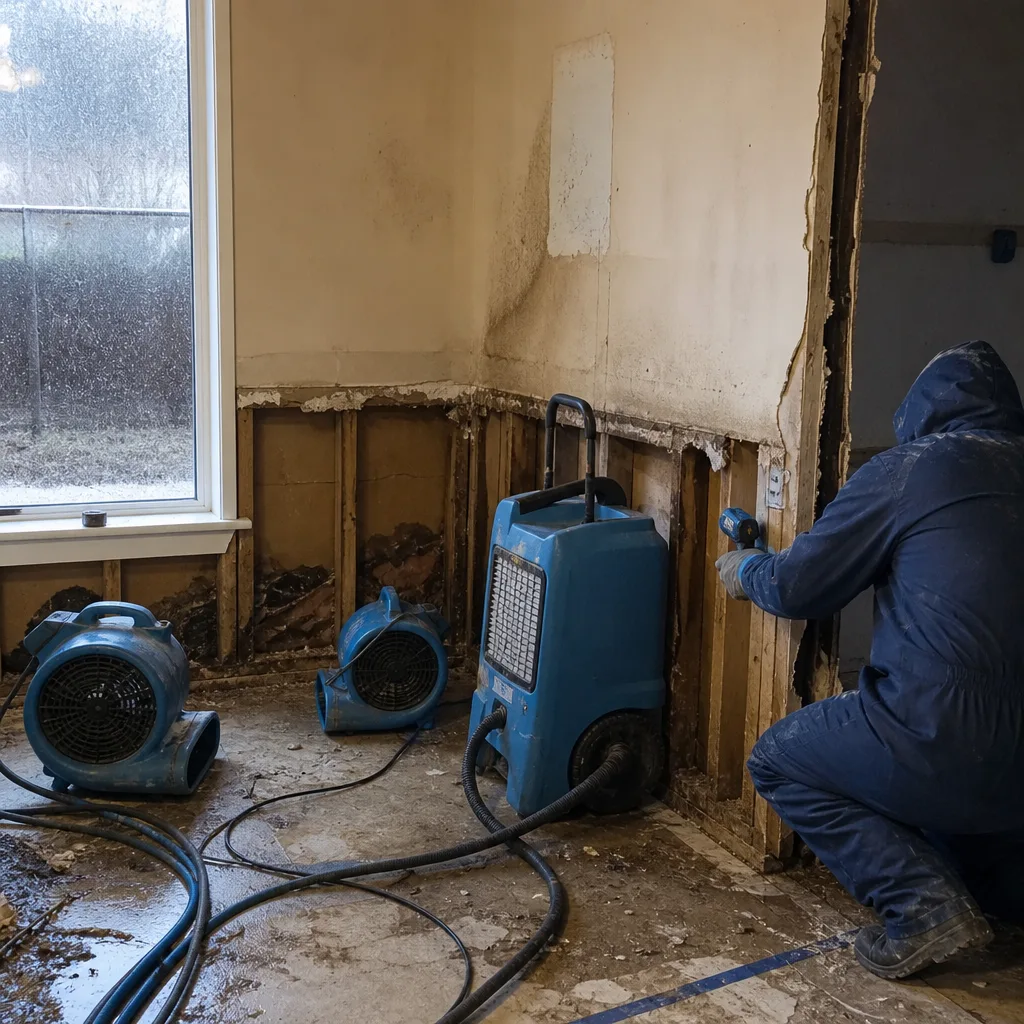 Before
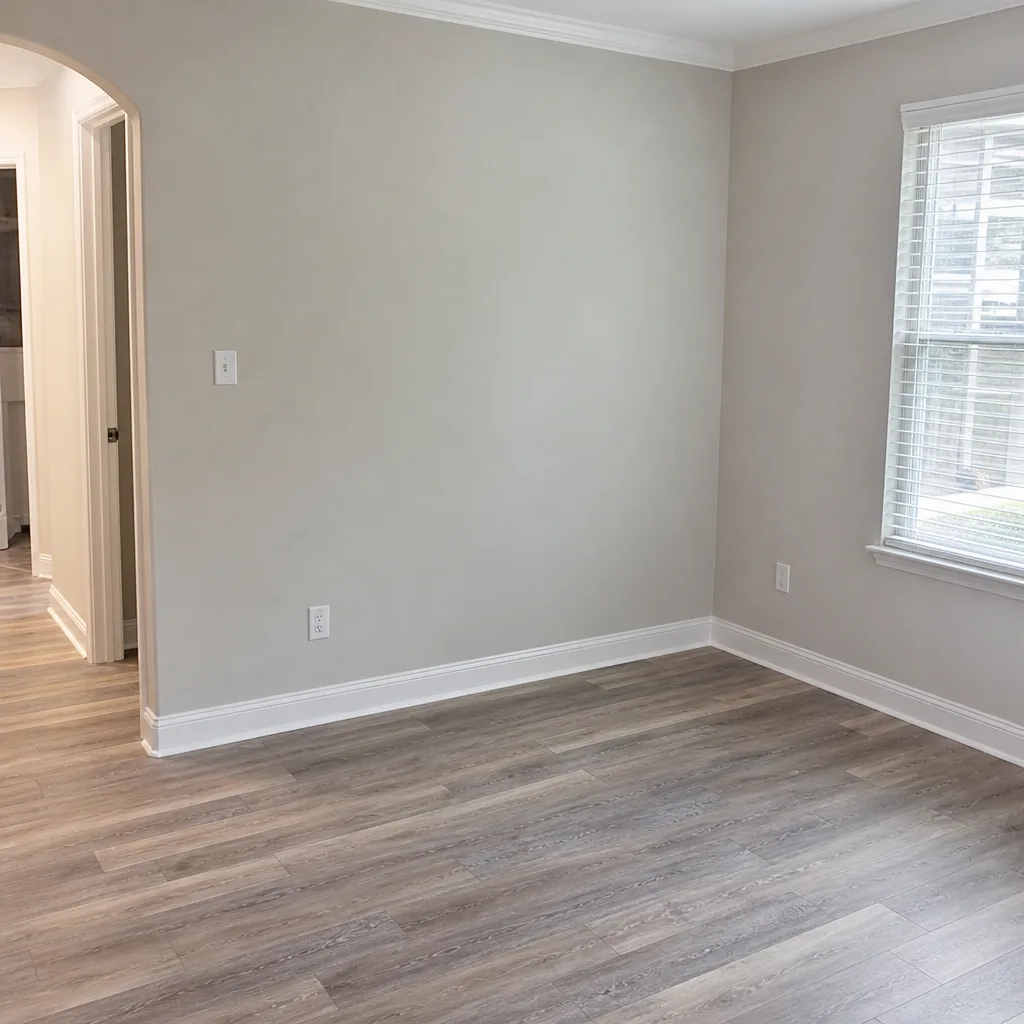 After
AfterWhen to Call a Professional
Call a professional when the water has touched drywall, flooring edges, or anything below the finished surface. Call when the water is gray or black category, when you can smell anything musty, when you see mold larger than a dinner plate, or when more than 24 hours have passed since the water event. Call when there has been a fire of any size, or when you’re standing in a wet room wondering what your insurer will say. Keegan Restoration Fort Worth offers free estimates in Fort Worth, and a live person answers the phone at (682) 900-2821 any hour of the day or night. The call costs nothing, and the worst case is that you find out your situation is a legitimate DIY job with professional guidance on how to do it right.
Frequently Asked Questions
You can dry surface water on sealed floors if the water was clean, the exposure was under 24 hours, and no porous materials were touched. If water has reached drywall, baseboards, or flooring edges, residential fans and a rental dehumidifier will not dry the wall cavity or subfloor to a verifiable standard, and the trapped moisture will eventually become mold. Call (682) 900-2821 for a free assessment before you commit to the DIY route.
Keegan Restoration Fort Worth answers every call with a live person, 24 hours a day, seven days a week, including nights, weekends, and holidays. Dispatch times depend on your location in the metro and current call volume, but when you call (682) 900-2821, you’ll speak to a human being who can tell you exactly when a crew can be on site.
Most homeowners’ policies cover sudden and accidental water and fire damage, and the professional documentation from the restoration company is what supports that coverage. Keegan Restoration Fort Worth documents every job and formats that documentation to support your insurance claim. The written scope before work starts is also the document that keeps the price honest. We recommend calling your insurer as soon as the event occurs, then calling us at (682) 900-2821 to begin the professional documentation.
If the visible mold patch is smaller than 10 square feet and the moisture source has been permanently corrected, surface cleaning may be sufficient. If the patch is larger than 10 square feet, if the moisture source is not identified and fixed, or if the mold is behind drywall, full remediation with containment is necessary. Visible mold on a wall in a Fort Worth home almost always means hidden mold in the wall cavity. A free assessment is the fastest way to know which situation you have.
You remain the policyholder and the decision-maker, but Keegan Restoration Fort Worth provides the documentation that supports your claim: moisture readings, scope of loss, photos, and drying records. We know what adjusters look for because we work to IICRC, RIA, and IFA standards, and our documentation is formatted to meet their requirements. You talk to your adjuster; we give you the paper trail that makes the conversation productive.
The 365-Day Done Right Promise is a written, one-year guarantee on every repair performed by Keegan Restoration Fort Worth. If the work fails within one year, we return and make it right at no charge, including a free second visit if the repair fails within the guarantee period. This is part of The Garrison Standard: the price is put in writing before any work begins, technicians are background-checked and arrive in uniform, and the work is guaranteed for a full year. No fine print, no exclusions beyond the normal ones you’d expect for new damage or homeowner misuse.
The Bottom Line
DIY damage restoration in Fort Worth works in exactly one scenario: clean water on sealed floors, caught quickly, dried completely within 24 hours, with nothing porous affected. Every scenario beyond that crosses into legal thresholds, insurance documentation requirements, and structural moisture territory where a homeowner’s best efforts become a liability. The difference between DIY and professional work isn’t skill. It’s documentation, equipment, and the legal standing to defend the work. And when you factor in the cost of a failed DIY attempt, followed by a larger professional job, the honest math usually favors calling a professional from the start. The Keegan Restoration Fort Worth home page has more on how we work, and the phone number is (682) 900-2821. A live person answers, any hour, and the estimate is free.
Written by Shane Pruitt, Owner at Keegan Restoration Fort Worth, serving Fort Worth since 2005.