
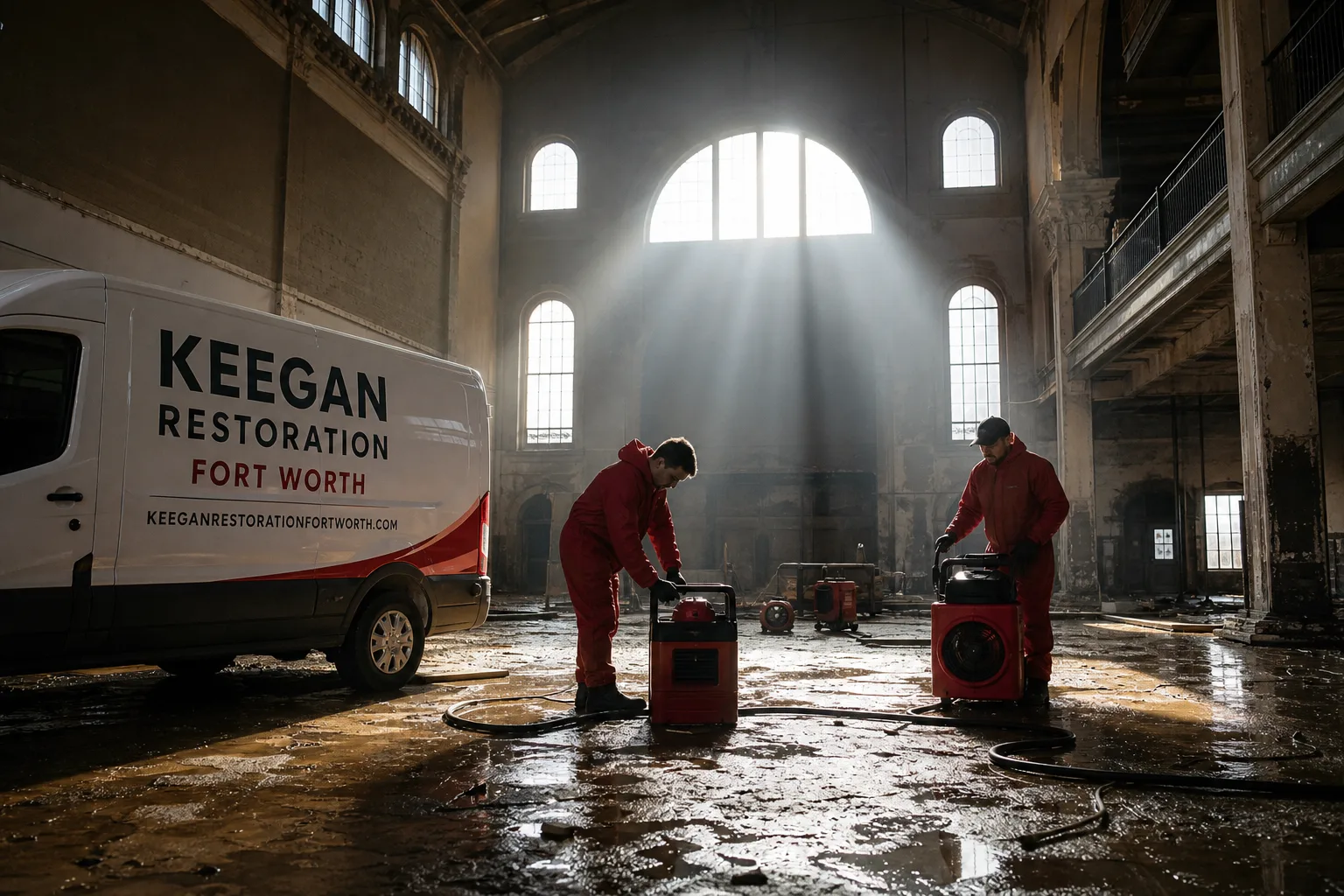
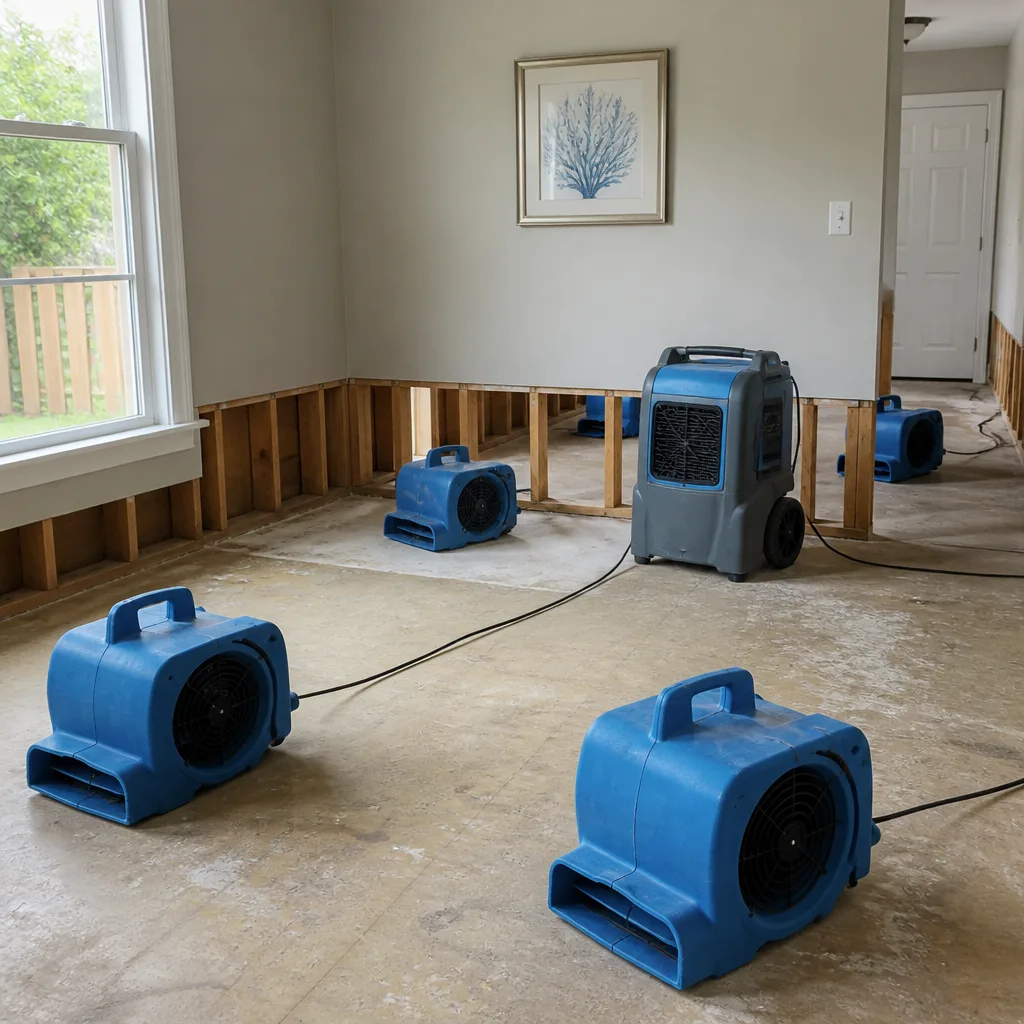
 Water damage drying
 Fire & smoke cleanup
 Mold remediation
 Storm response
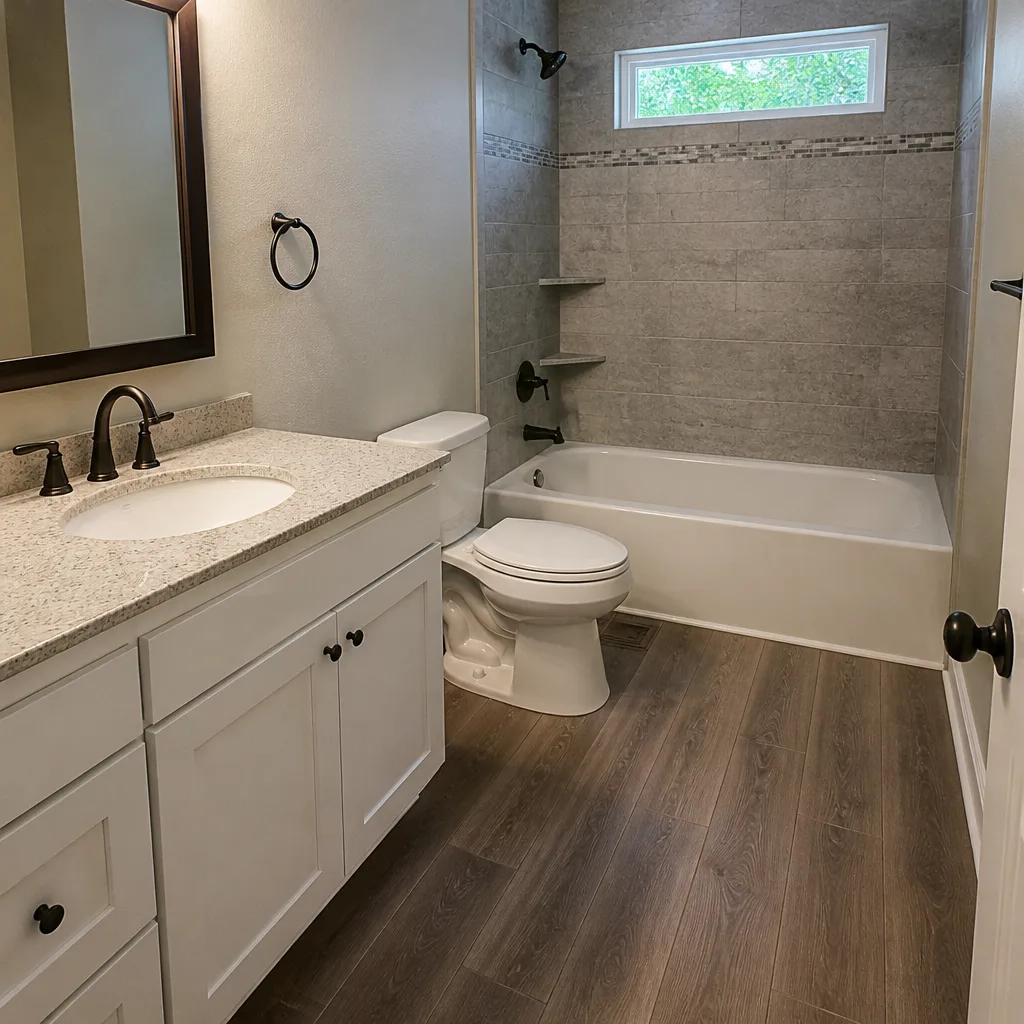 Sewage cleanup
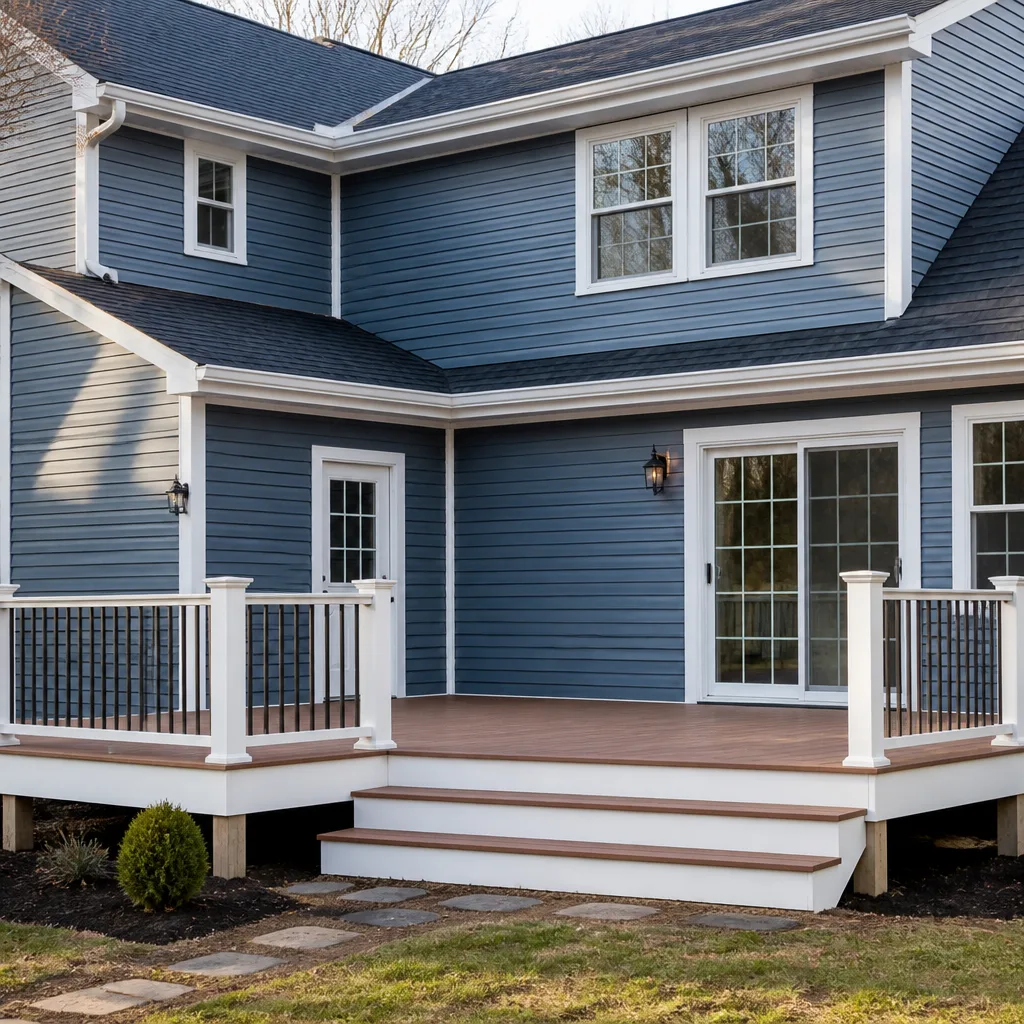 Reconstruction
Free visual inspection and a written scope of work before any mitigation begins - photos, moisture readings, and drying logs go in your claim file
The scope we write is the scope we bill. Anything new gets shown to you, in writing, before we touch it.
Get your free estimateRestoration work we handle
See the difference
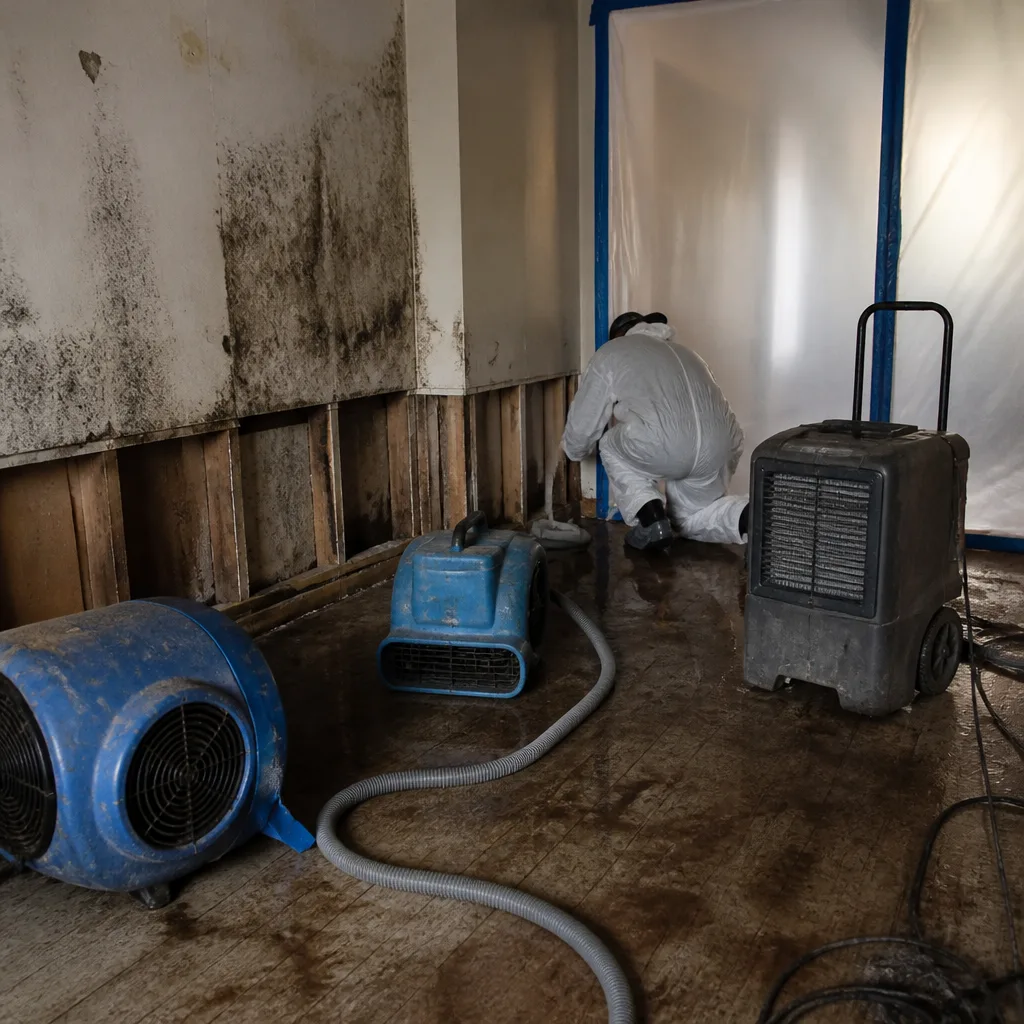 Before
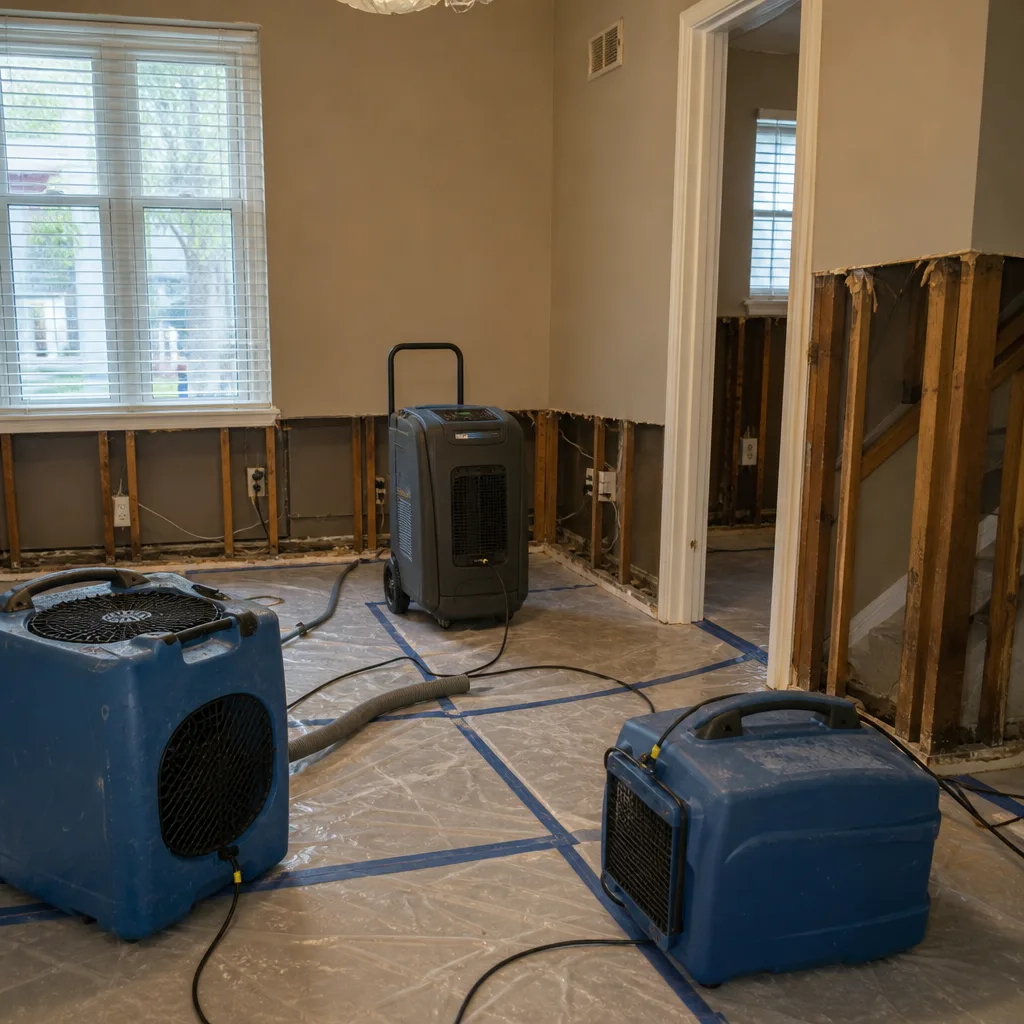 After
After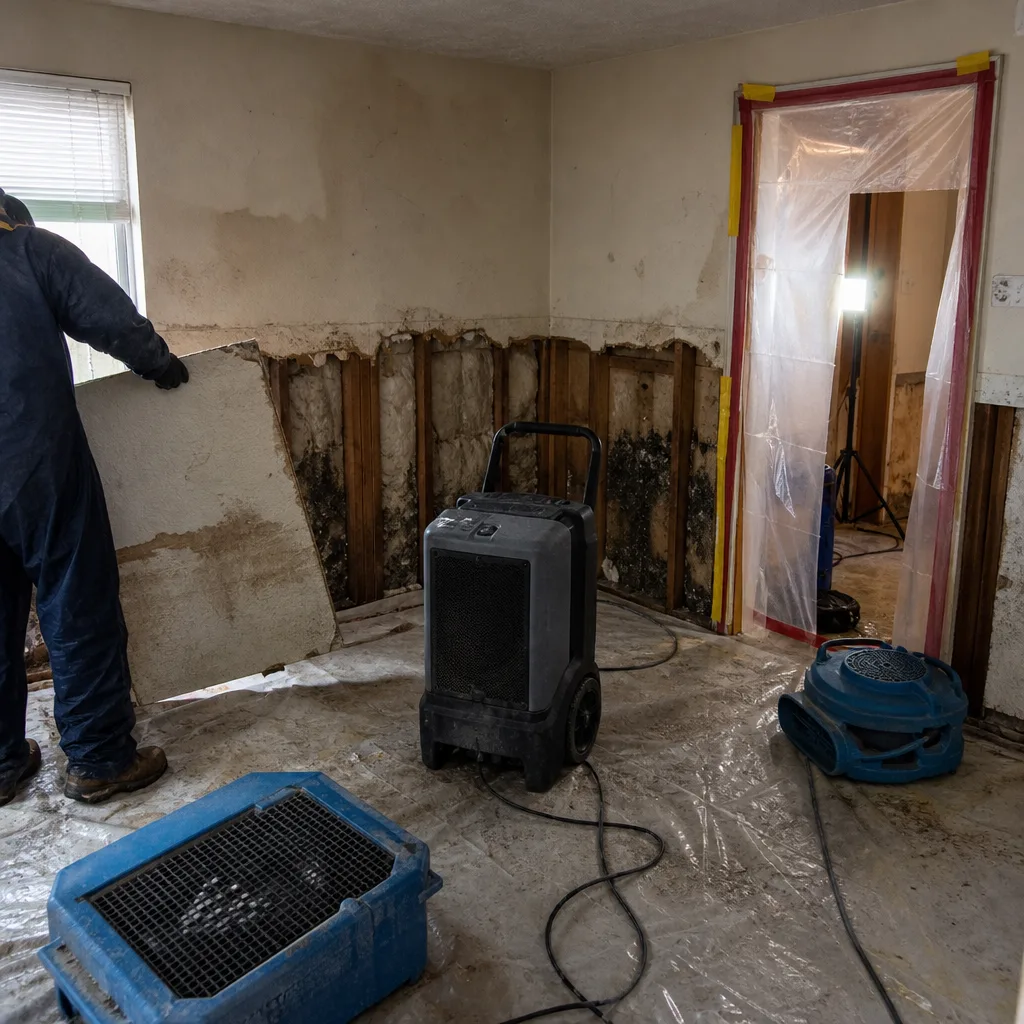 Before
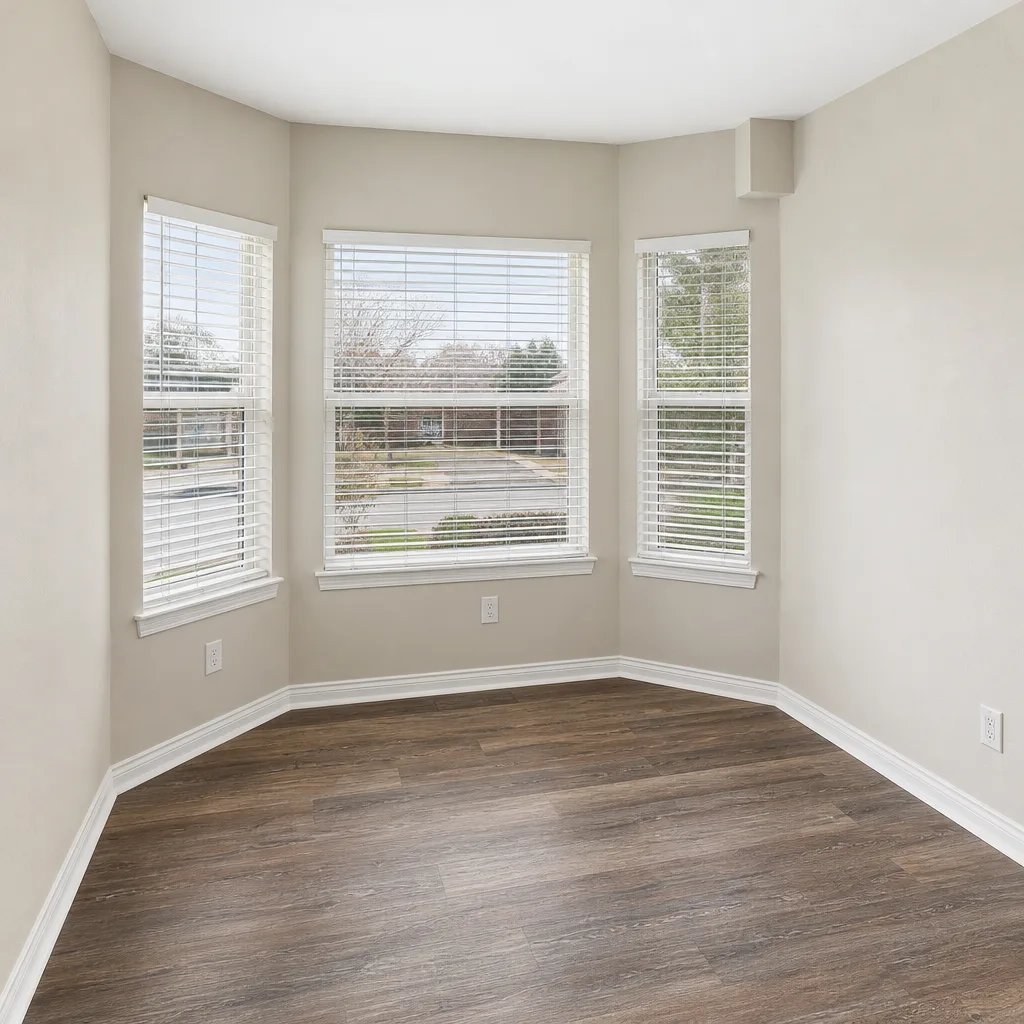 After
After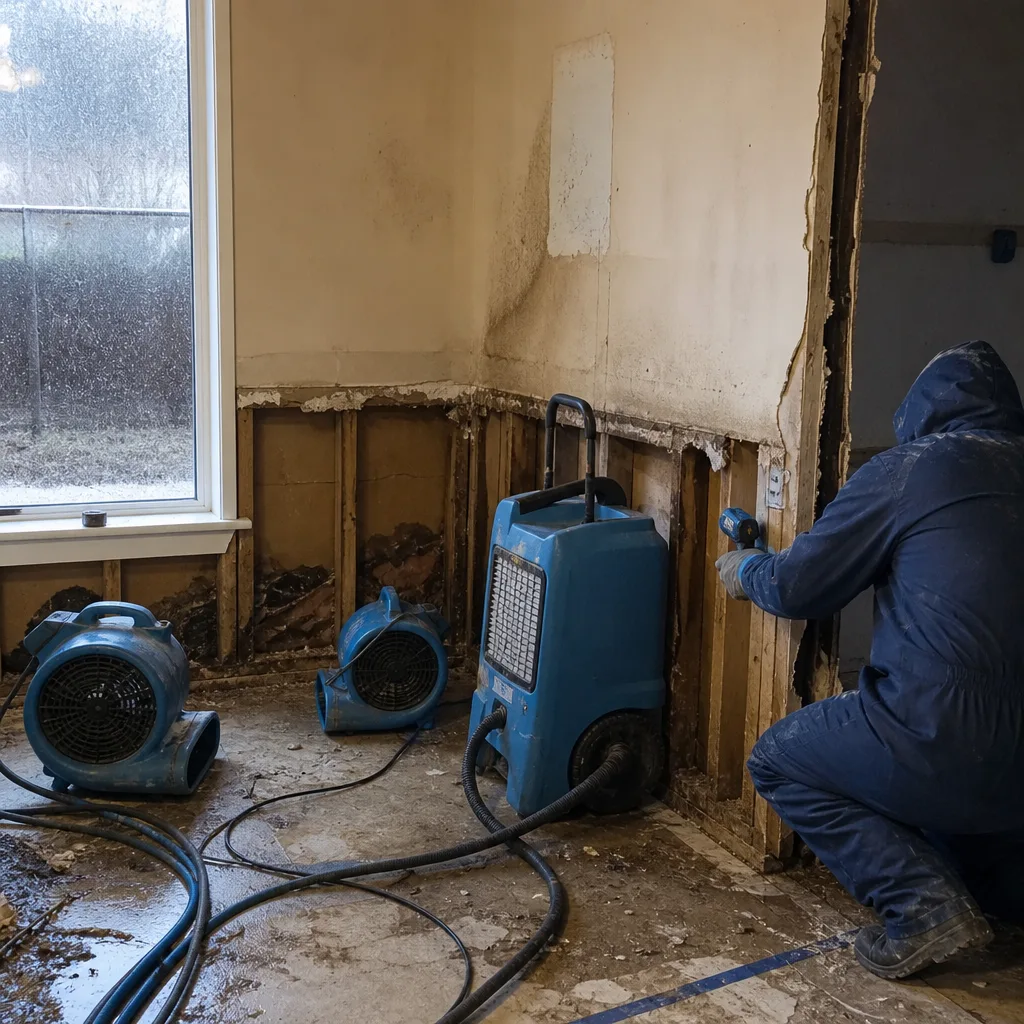 Before
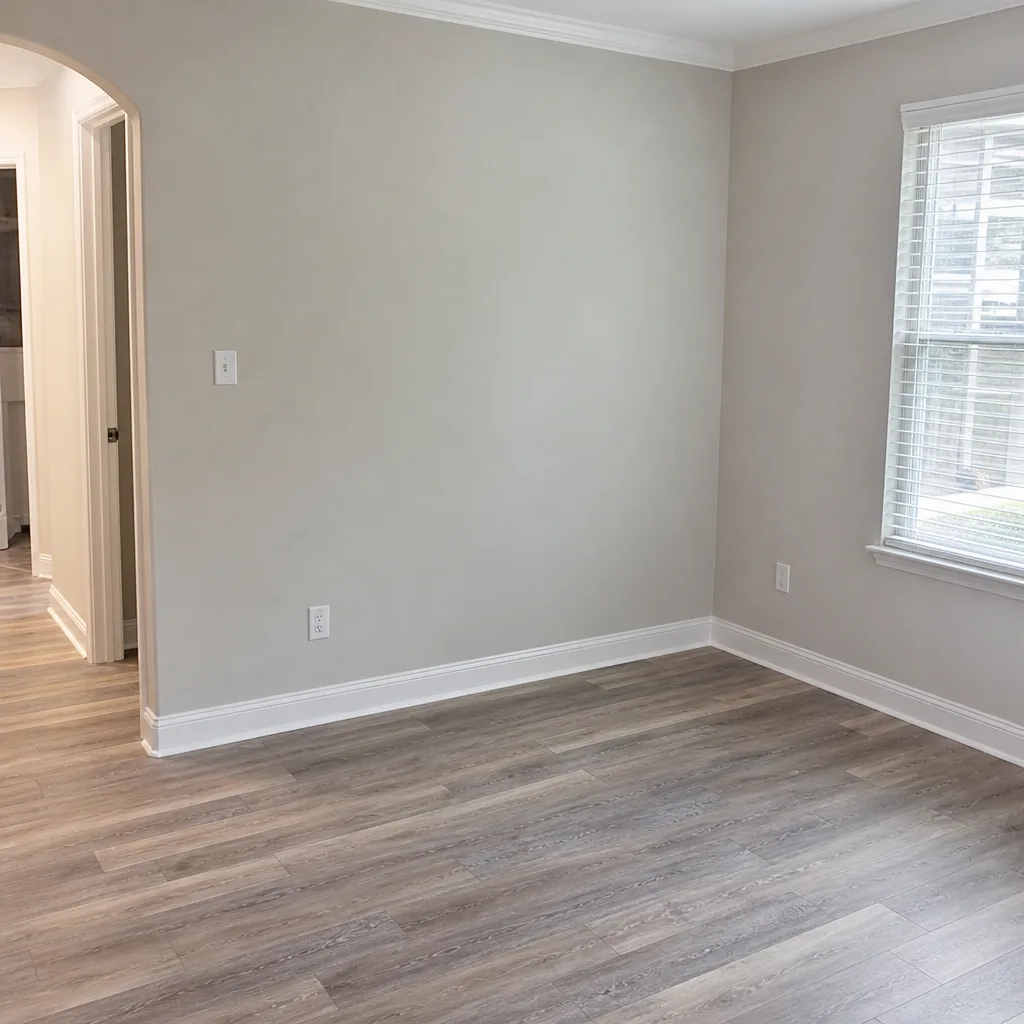 After
AfterHow Much Does Damage Restoration Cost in Fort Worth?
Most Fort Worth homeowners pay between $1,200 and $4,500 for water damage restoration, $3,000 to $8,000 for fire damage restoration, and $2,000 to $6,000 for mold remediation, with the final number driven by square footage, water category, and how far the damage spread before crews arrived. Small, contained issues like a bathroom supply-line leak caught early can run under $1,000, while a full-house flood cut or a kitchen fire with smoke damage throughout the structure can top $25,000. These numbers reflect the actual bid ranges we see on Fort Worth jobs from Ridglea Hills to Saginaw, and they come from the same pricing data we use when we write your estimate before any equipment leaves the truck.
What you’ll notice if you call around Fort Worth is that the spread between the low bid and the high bid on the same job can be thousands of dollars. That gap is not random. It comes down to equipment, documentation, and whether the crew actually dries the structure to a measurable standard or just runs fans until the surface feels dry. We’ll walk through each of those factors below.
Key Takeaways
- Water damage restoration in Fort Worth typically runs $1,200 to $4,500 for average single-room incidents; whole-home floods run higher.
- Fire damage restoration averages $3,000 to $8,000 for a contained kitchen fire, with smoke and soot cleanup accounting for a large share of labor.
- Mold remediation in Fort Worth ranges from $2,000 to $6,000 for most residential jobs, with crawl spaces and HVAC contamination pushing costs up.
- Category 3 water (sewage, floodwater) costs 30 to 50% more than Category 1 clean-water jobs because of containment, disposal, and antimicrobial protocols.
- Fort Worth’s clay-heavy soil and summer heat patterns create specific drying challenges that affect equipment time and final pricing.
Damage Restoration Cost Breakdown (2026)
Here’s what we’re quoting on Fort Worth jobs in 2026, broken down by service type and scope. These are the numbers we put in writing before work starts, and they hold unless we find hidden damage behind a wall or under flooring that changes the scope of loss.
| Service Type | Typical Scope | Fort Worth Price Range |
|---|---|---|
| Water damage restoration | Single room, Category 1 clean water, extraction plus 3-4 days of drying | $1,200 – $2,800 |
| Water damage restoration | Multiple rooms or whole floor, Category 2 or 3 water | $4,000 – $12,000+ |
| Fire damage restoration | Contained kitchen fire, soot and smoke cleanup, no structural rebuild | $3,000 – $8,000 |
| Fire damage restoration | Whole-home smoke damage, content cleaning, odor removal | $8,000 – $25,000+ |
| Mold remediation | Bathroom or closet, under 100 square feet of visible growth | $2,000 – $4,500 |
| Mold remediation | Crawl space, attic, or HVAC system involvement | $4,500 – $10,000+ |
| Emergency water extraction | Standalone extraction call, no drying | $400 – $900 |
| Content pack-out and cleaning | After fire or mold, depending on volume | $1,500 – $6,000 |
Three things move these numbers up or down more than anything else. First is water category. Category 1 water comes from a clean source like a supply line or a water heater. Category 2 contains contaminants like washing machine discharge. Category 3 is sewage, creek water, or anything that sat long enough to grow bacteria. Category 3 jobs in Fort Worth run roughly 30 to 50% higher because we have to set containment, remove contaminated materials, and run antimicrobial treatments before drying even starts.
Second is how long the water sat. A leak caught in the first few hours dries with extraction and air movers. A slow leak that ran for two weeks under a slab in the Alliance area soaks into drywall, baseboards, and subfloor, and those materials usually come out instead of drying in place. Demolition and rebuild labor adds hundreds to thousands of dollars.
Third is what the water touched. Fort Worth homes built before about 1980 often have plaster walls and hardwood floors that respond differently than the gypsum and engineered flooring in newer construction in places like Walsh or Harvest. Plaster wicks water slower but can hold it longer. Hardwood floors can sometimes be saved with a drying mat system like Injectidry, which pulls water out of the subfloor through the top surface. That equipment and labor is a line item, but it is often cheaper than full floor replacement.
What Affects Damage Restoration Pricing in Fort Worth
- Foundation type and soil conditions. Fort Worth sits on expansive clay soil that shifts with moisture. Slab foundations are common, and water that gets under a slab from a plumbing leak can travel through channels in the clay and appear in a room twenty feet from the source. Locating and accessing that water takes longer here than in other markets.
- Summer heat and humidity patterns. From June through September, Fort Worth sees sustained 95-degree days with humidity that slows evaporation rates. Restorers use psychrometrics, which is the science of how moisture moves through air and materials, to calculate how many dehumidifiers and air movers a room needs. More equipment days means a higher drying line item.
- Age of the home and building materials. A 1950s home in Wedgwood with original hardwood and plaster responds differently than a 2015 build in River District. Older materials often require more careful drying or more demolition, and both of those add labor hours.
- Water category and contamination level. Clean water from a supply line is straightforward. Sewage or floodwater brings containment, removal, disposal, and antimicrobial treatment. That suite of protocols can add 30 to 50% to the job total.
- Access to the affected area. Crawl spaces, tight attics in older Fort Worth bungalows, and water trapped under cabinetry or built-ins all slow the work. If we have to remove and reset a vanity or pull a toilet to dry underneath it, that is labor we price into the estimate up front.
- Insurance involvement and documentation requirements. If you are filing a claim, the adjuster will require a scope of loss, photo documentation, moisture readings, and drying logs. We format every job to support your insurance claim, which means the paperwork is already built for what your adjuster needs.
How to Save on Damage Restoration
The single biggest cost lever you control is speed. Water that gets extracted in the first few hours after a leak often dries without demolition. The same leak left over a weekend means drywall cuts, baseboard removal, and possibly subfloor replacement. Call the moment you see water. A live person answers our phone 24 hours a day, 7 days a week, including nights, weekends, and holidays. When water is actively damaging your home, you are not routed through a phone tree.
Second, know what your insurance covers before you sign anything. Most Fort Worth homeowners policies cover sudden and accidental water damage, fire damage, and mold remediation when the mold is caused by a covered water event. What they do not cover is long-term neglect or gradual leaks that ran for months. If there is any question, we walk through what the adjuster will look for and how the documentation will read. That conversation happens before work starts, not after.
Third, get a written price before any work begins. This is not about shopping for the cheapest bid. It is about eliminating the crew that quotes one number on the phone and another at the door. At Keegan Restoration Fort Worth, the price goes in writing before equipment comes off the truck, and that price does not move unless we uncover hidden damage that changes the scope. If that happens, we show you what we found and get your sign-off before proceeding.
Fourth, do not let a small mold issue sit because you are worried about the cost of remediation. A 20-square-foot patch in a bathroom costs a few thousand dollars to remediate properly. The same mold spreading into a crawl space or the HVAC system in a Fort Worth home costs two to four times that because it moves from surface removal to full containment and air-handling cleanup. The trade’s real word for the cheap-looking fix is “paint-over,” and it fails every time the moisture source is still there.
Call (682) 900-2821 for a free estimate, and we will put the numbers in front of you before anything starts.
Water Damage Restoration Costs in Fort Worth
Water damage is the most common call we run in Fort Worth, and it breaks into two distinct cost buckets: extraction and drying. Emergency extraction alone runs $400 to $900 when you just need standing water removed fast. A full restoration job including drying, dehumidification, and monitoring runs $1,200 to $4,500 for a typical single-room incident and scales up from there.
Here is how the line items actually break down on a standard Fort Worth water job. Extraction labor and truck time is usually $300 to $600. Air movers and dehumidifiers, usually Dri-Eaz or Phoenix units, run $40 to $75 per day per unit, and a single room typically needs four to six air movers and one or two dehumidifiers for three to five days. Moisture monitoring and daily visits to check drying progress add another $200 to $400. Demolition and disposal, if drywall or flooring has to come out, adds $500 to $2,000 depending on how much material is involved and whether it is Category 3 water requiring bagged, controlled disposal.
The equipment matters more than most homeowners realize. We run Dri-Eaz, Phoenix, XPOWER, B-Air, and Injectidry units, which are the professional-grade brands used in IICRC-standard restoration work. Cheap rental fans from a hardware store move air but do not create the low-vapor-pressure environment that actually pulls moisture out of drywall and subfloor. A room that is not dried to a measurable standard will fail later. The 365-Day Done Right Promise covers that failure in writing for a full year.
One pattern we see regularly in Fort Worth, especially in older neighborhoods like Arlington Heights and Berkeley Place, is water traveling from a second-floor bathroom leak down into a first-floor ceiling cavity and then along joists to a different part of the house entirely. The visible stain is in the living room, but the source is the upstairs shower pan. That kind of job requires cutting into a ceiling to chase the water path, which adds labor and drywall repair to the estimate. It is also exactly why we scope every job before pricing rather than quoting over the phone.
Fire Damage Restoration Costs in Fort Worth
Fire damage restoration in Fort Worth averages $3,000 to $8,000 for a contained kitchen fire, including soot removal, smoke odor treatment, and content cleaning. A larger fire with smoke damage throughout the home runs $8,000 to $25,000 or more, and the biggest wildcard is structural rebuild work, which restoration crews scope but often requires a general contractor.
Soot is where the labor hours go. Soot is acidic, and it etches into paint, countertops, fixtures, and appliances within hours. The longer it sits, the deeper the damage. A kitchen fire in a Fort Worth home that gets treated within 24 to 48 hours often needs surface cleaning, sealant on affected walls, and thermal fogging for odor. Wait a week, and the same fire can require full repainting, cabinet refinishing, and replacement of porous surfaces that absorbed smoke odor.
Odor removal is the part most homeowners do not budget for. Smoke molecules penetrate drywall, insulation, carpet, and especially HVAC ductwork. We use thermal fogging and ozone treatment in contained spaces, and in houses where smoke ran through the air handler, duct cleaning becomes a line item. In Fort Worth, where most homes run central AC nine months of the year, a furnace pulling smoke through the return registers spreads soot to every room, even ones the fire never reached.
After any fire in Fort Worth, there is also the water damage from firefighting. A kitchen fire can mean 200 to 500 gallons of water put through the room by first responders before the flames are out. That water is Category 2 or Category 3 because it has run through burned materials and picking up contaminants. The fire restoration job is almost always a water restoration job underneath it.
Mold Remediation Costs in Fort Worth
Mold remediation in Fort Worth runs $2,000 to $6,000 for most residential jobs, with small contained areas like a bathroom wall or closet under 100 square feet landing at the low end, and crawl spaces, attics, or HVAC involvement pushing into the $4,500 to $10,000 range. The cost is driven by containment setup, negative air pressure equipment, removal of affected materials, and the clearance testing that happens at the end of the job.
Fort Worth’s climate is the reason mold is a persistent issue here. From April through October, outdoor humidity regularly sits above 60%, and a small water leak behind a wall in a home in Saginaw or Benbrook becomes a mold problem within a few days. The difference between a $2,000 remediation and an $8,000 one is usually whether the moisture source was found and fixed early or whether the growth spread into structural framing.
Containment is not optional on a mold job. We set up sealed polyethylene barriers and run negative air machines to keep spores from spreading to unaffected areas during removal. That equipment and setup is typically $600 to $1,200 of the total, and it is the line item that distinguishes a real remediation from a company that just sprays bleach and walks away. Bleach does not kill mold on porous surfaces like drywall and wood, and it can make the moisture problem worse. The standard is removal and replacement of contaminated material, followed by drying to a measurable moisture content and a written clearance if you choose to have post-remediation testing done.
Crawl spaces in Fort Worth homes deserve special mention. Pier-and-beam foundations are common in older neighborhoods like Fairmount and Ryan Place, and those crawl spaces stay humid through most of the year. When we remediate mold in a crawl space, the job often includes encapsulation or at least a vapor barrier installation to prevent recurrence. That adds $1,500 to $3,000 to the scope, but it is the difference between a fix that holds and a re-emergence six months later. The 365-Day Done Right Promise covers our work in writing, so we do not cut corners on the moisture source. A call-back within the year is free, which means it is in our interest to get it right the first time.
Step-by-Step: What a Fort Worth Damage Restoration Job Actually Looks Like
This is the sequence on a typical water job, and the process is similar for fire and mold with service-specific equipment changes. We run every job through The Garrison Standard, which means the price is in writing before work starts, technicians are background-checked and in uniform, and the work is documented to support your insurance claim.
- Initial call and scope discussion. You call (682) 900-2821, you talk to a live person, and we ask about the source, the area affected, and whether you have filed or plan to file an insurance claim. We also tell you what to do immediately to limit spread, like shutting off the water and moving furniture out of the affected area if it is safe to do so.
- On-site assessment and written estimate. We send a technician to your Fort Worth home, typically inside the window we gave you on the phone. The technician inspects the full scope of loss, including areas behind walls and under flooring that are not visible. You get a written price before any work begins.
- Containment and safety setup. For Category 2 or 3 water, fire, or mold, we set containment barriers and, where needed, run negative air machines. This keeps contamination from spreading through the house during the work.
- Water extraction or debris removal. On water jobs, we run truck-mounted or portable extraction units to pull standing water out fast. On fire jobs, we remove unsalvageable materials. On mold jobs, we remove affected drywall, insulation, or flooring under containment.
- Drying and dehumidification. We place air movers and dehumidifiers according to psychrometric calculations specific to your home’s square footage and the ambient conditions in Fort Worth that week. We monitor daily with moisture meters and document every reading.
- Cleaning, antimicrobial treatment, and odor removal. Depending on the job, this includes antimicrobial application, soot and smoke cleaning, thermal fogging, or content cleaning. Every step is documented.
- Moisture verification and clearance. We prove the structure is dry with moisture readings, not a visual check. On mold jobs, we can coordinate post-remediation testing if you want independent verification.
- Repair and rebuild scope. We document what was removed and what needs replacing, formatted to support your insurance claim. Depending on the job, repairs may be handled by our team or coordinated with a trusted contractor.
- Written guarantee. Every job gets the 365-Day Done Right Promise in writing. If the repair fails within one year, we return and make it right at no charge.
Fort Worth Insurance and Documentation: What You Need to Know
Most Fort Worth homeowners file an insurance claim for water and fire damage, and the most common complaint we hear is that the process felt adversarial. It does not have to be. The difference is documentation. An adjuster needs a scope of loss, a complete photo record, moisture readings, drying logs, and itemized line items that match the work performed. We build that paperwork on every job because we run to The Garrison Standard, which includes full job documentation formatted to support your insurance claim.
What that means in practice: when your adjuster asks for proof that the subfloor was actually dried, you have a moisture log with daily readings. When they ask why three dehumidifiers ran for four days instead of two, you have the psychrometric calculation that justified the equipment count. When they ask what was removed and why, you have photos from before, during, and after removal. That level of documentation is the difference between a claim that gets paid at full scope and one that gets lowballed.
One thing to understand about Fort Worth specifically: the city’s rapid growth means a lot of newer homes in areas like Alliance, Walsh, and Chisholm Trail, and builders in these fast-track developments do not always leave detailed as-built records. When a pipe bursts in a wall that was not built exactly to plan, the water path can be unpredictable. We have run jobs where a plumbing leak in a master bath in a north Fort Worth new build showed up as ceiling staining in the downstairs kitchen on the opposite side of the house. That kind of investigation takes time and experience, and it is exactly the difference between a restoration crew that scopes properly and one that dries the visible stain and leaves the hidden water to rot.
Why Fort Worth Pricing Differs from Dallas or Arlington
If you compare damage restoration bids across the Metroplex, you will notice Fort Worth pricing runs slightly lower than Dallas and roughly even with Arlington and Irving. The reasons are structural, not random. Labor rates for restoration technicians in Tarrant County run 10 to 15% below Dallas County, driven by lower overhead and a more competitive contractor market. Material costs are identical. The real difference is geography and housing stock.
Fort Worth has a higher percentage of slab-on-grade construction and pier-and-beam homes than Dallas, which skews heavier toward slab foundations in new development. Pier-and-beam homes in Fort Worth historic districts are easier to access underneath, which can lower water restoration costs on jobs where the crawl space is the source. But those same crawl spaces are more prone to standing water and mold, which raises remediation costs. The net effect is that Fort Worth pricing for most water jobs lands between $1,200 and $4,500, while the same job in Dallas might run 10 to 15% higher.
The clay soil affects both markets, but Fort Worth’s position west of the Trinity River means certain neighborhoods, especially Ridglea Hills, Wedgwood, and areas west of Loop 820, sit on soils with higher clay content that moves more aggressively with moisture. Plumbing leaks under slabs in those neighborhoods are more common than homeowners expect, and the resulting water damage often requires slab access, which is specialized work that adds cost.
FAQs – Damage Restoration Cost
How much does water damage restoration cost in Fort Worth?
Water damage restoration in Fort Worth runs $1,200 to $4,500 for a typical single-room incident with clean water, and $4,000 to $12,000+ for multi-room or Category 3 water jobs. The price includes extraction, drying equipment, daily monitoring, and disposal. Call (682) 900-2821 for a written estimate specific to your home, free of charge.
Is it cheaper to repair or replace water-damaged drywall?
If drywall was soaked with clean water and dried within 48 hours, repair is usually viable and runs $200 to $500 per wall section including repainting. If the water was Category 3 or the drywall has been wet for more than a few days, replacement is the right call and runs $500 to $1,500 depending on the area. We make that call based on moisture readings and material condition, not guesswork, and the price goes in writing before work starts.
How much does mold remediation cost in Fort Worth?
Mold remediation in Fort Worth ranges from $2,000 to $6,000 for most residential jobs, with small contained areas under 100 square feet at the low end and crawl space or HVAC involvement at the high end. Severe structural contamination can exceed $10,000. The cost centers on containment, removal of contaminated materials, negative air pressure, and clearance verification. Call (682) 900-2821 for a free estimate and we will scope it properly.
Can you come today for a water emergency?
Yes. A live person answers our phone 24 hours a day, 7 days a week, including weekends and holidays, and we dispatch crews to Fort Worth water emergencies the same day. Extraction within the first few hours is the single biggest factor in whether your job stays under $2,000 or expands past $5,000. Call (682) 900-2821 the moment you see water, and we will get a background-checked, uniformed technician out to you.
Does homeowners insurance cover damage restoration in Fort Worth?
Most Fort Worth homeowners policies cover sudden and accidental water damage, fire damage, and mold remediation caused by a covered event. The typical covered water job has a deductible of $1,000 to $2,500, and we document every job to support your insurance claim. Gradual leaks and long-term moisture issues are often excluded, which is why we explain the source and scope clearly before work begins. Call (682) 900-2821 and we will help you understand what your policy likely covers before you file.
What does the guarantee cover on a Fort Worth restoration job?
Every repair at Keegan Restoration Fort Worth is backed by the 365-Day Done Right Promise, a written one-year guarantee that covers workmanship and materials. If the repair fails within a year, we return and make it right at no charge. No deductible, no re-bid, no back-and-forth. That is The Garrison Standard, and it is in writing on every job.
Get a Straight Answer on Your Fort Worth Restoration Cost
If you have water in your home right now, call (682) 900-2821. If you are planning ahead or comparing bids, call the same number and we will talk through the scope, walk you through what drives cost in Fort Worth specifically, and schedule a free on-site estimate. You will get a written price before any work starts, the crew that shows up will be background-checked and in uniform, and the work will be documented to support your insurance claim. No pressure, no door-moving price games, just a straight answer from a local team that has been part of the Garrison Partners family since 2005.
Keegan Restoration Fort Worth provides water damage restoration, fire damage restoration, and mold remediation across Fort Worth and the surrounding areas. We run to The Garrison Standard on every job: show up inside the window, price in writing, do it by the book, leave the site clean, and stand behind the work for a full year. That is the whole deal.
Written by Shane Pruitt, Owner at Keegan Restoration Fort Worth, serving the Fort Worth market since 2005.
Pricing reflects the Fort Worth market as of 2026. Keegan Restoration Fort Worth offers free estimates – call (682) 900-2821.
What Our Customers Say
"Water heater burst in the garage and flooded the hall. Crew was there fast, in uniform, set up dehumidifiers and air movers, and ran drying logs every day. Veteran-owned and organized."
- Gail S."Mold test after drying came back clean. They gave me the readout in writing so I could keep it with the insurance file."
- Gus P."Basement water from a bad sump pump. Extracted, dried, and treated for mold. The smell is gone."
- Perry J.